06/01/2026
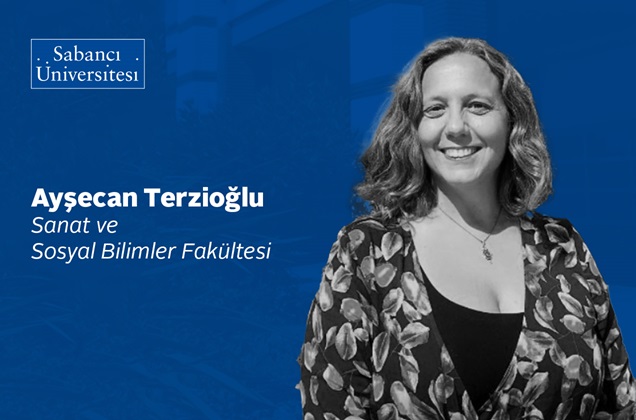
Ayşecan Terzioğlu
Faculty of Arts and Social Sciences, Faculty Member
A few years ago, a student of mine wrote on an exam paper explaining the reasons for health inequalities: “Politically and economically stronger countries exploit other countries directly or indirectly. This is a natural and normal process, an unchangeable rule of the game.” These statements initially angered me, but then made me think about how easy it is to internalize inequalities and live without questioning them. Of course, this naturalization and normalization also leads to easier acceptance of the effects of political, economic, social, and cultural inequalities on every aspect of people's lives. However, different perspectives on questioning inequalities play important roles in shaping our thoughts and behaviors in many areas of life, from the dynamics of family relationships to the questioning of educational content, from doctor-patient communication to the discussion of political ideas.
Within this framework, my research areas encompass the interaction of global and local health inequalities with individuals' experiences and narratives of health and illness, linking this interaction to concepts such as body image, identity and belonging, temporality, and spatiality. Therefore, studying structural and systemic inequalities experienced in the field of health also connects me with general political, economic, and cultural inequalities and discriminations affecting other social areas and institutions such as family, education, and law. Global, national, and local inequalities are reflected in the discourses and practices concerning the body, health, and illness within healthcare institutions such as medical schools and hospitals, and are reproduced and indirectly or directly affect the lives of all people. Hospitals and clinics, which everyone will inevitably visit at least once in their lives for various reasons such as routine check-ups, illness, being a relative of a patient, and pregnancy—regardless of language, religion, nationality, race, ethnicity, gender, or sexual orientation—must be inclusive and egalitarian to accommodate this diversity. In many parts of the world, including Türkiye, the Hippocratic Oath, taken by medical students before entering the medical profession, serves this purpose. Nevertheless, social scientists conducting research in the field of health in different countries around the world are drawing attention to many structural and systemic inequalities and discriminations in health institutions, discourse, and practices, and discussing how people exposed to these problems are affected. In this way, it becomes easier to understand and question inequalities and discrimination in general, and in the field of health, along with their causes and consequences.
From the 19th century to the present day, many humanities and social scientists, from Karl Marx to Michel Foucault, have developed various theories about the causes and consequences of numerous structural and systemic inequalities. However, the questioning of inequalities in health from a social science perspective only began in the 1970s. During this period, social movements that drew attention to the oppressive and exclusionary potential of any institution or individual whose power and influence were unquestioned, the efforts to rehabilitate the traumatic mental health of thousands of soldiers returning from the Vietnam War in America, and feminist movements protesting the oppression of women's bodies, influenced social scientists' work on inequalities in health. In the 1980s, with global neoliberalism defining health not as a fundamental human right linked to the right to life, but as a commodity that can be bought and for which all economic and social resources must be mobilized, many states and international health organizations initiated a period of privatization in healthcare. In parallel, social scientists such as Paul Farmer and Arthur Kleinman also emphasized the class dimension in their studies of inequalities in access to healthcare services. During the same period, another frequently discussed issue was the HIV/AIDS epidemic and the association of this epidemic with homosexuality, leading to marginalization based on sexual orientation in societies and in the health sector. Since the 2000s, groundbreaking developments in medical technologies, particularly in reproductive and aesthetic matters, along with increasingly effective digital applications and social media platforms in the health field, have both created new inequalities and discriminations and offered new social and academic opportunities to combat these problems. Thus, the significant increase in the interplay between local and global dynamics makes it possible for different societies and organizations to draw strength from each other and for rights-based solidarity to occur against discourses and practices that reinforce and increase inequalities in the health sector.
Today, thanks to social media, an experienced inequality or discrimination can be transformed into a verbal and/or visual narrative, reaching thousands of people worldwide in seconds and garnering their support. Of course, this optimistic picture can be balanced by inequalities in areas such as the political and economic power of institutions, access to technology and English, digital literacy, and algorithmic knowledge. However, today, sharp divisions and even polarizations are evident in many current debates, such as "Are immigrants and refugees a financial burden on their host countries, or are health, education, housing, and employment their fundamental rights, just like any other human being?", and "What incentive or deterrent policies can prevent the decline in fertility rates seen in many countries, including Türkiye, or can a more liberal and inclusive approach be adopted?", with hundreds of different narratives and counter-narratives clashing amongst themselves. Statistical data, expert opinions, personal experiences, regulations, political discourse, and reports from civil society organizations all blend diverse perspectives on general inequalities and health inequalities, creating a kaleidoscope that simultaneously presents different ways of acknowledging, questioning, or challenging these inequalities. As a social scientist who has been researching and specializing in health since the 1990s, I have always been on the side of this kaleidoscope that questions inequalities, examines their causes and consequences, and contemplates creating a more equitable and inclusive healthcare environment globally and locally. So, where do you stand in this multifaceted, multi-voiced, and colorful picture?